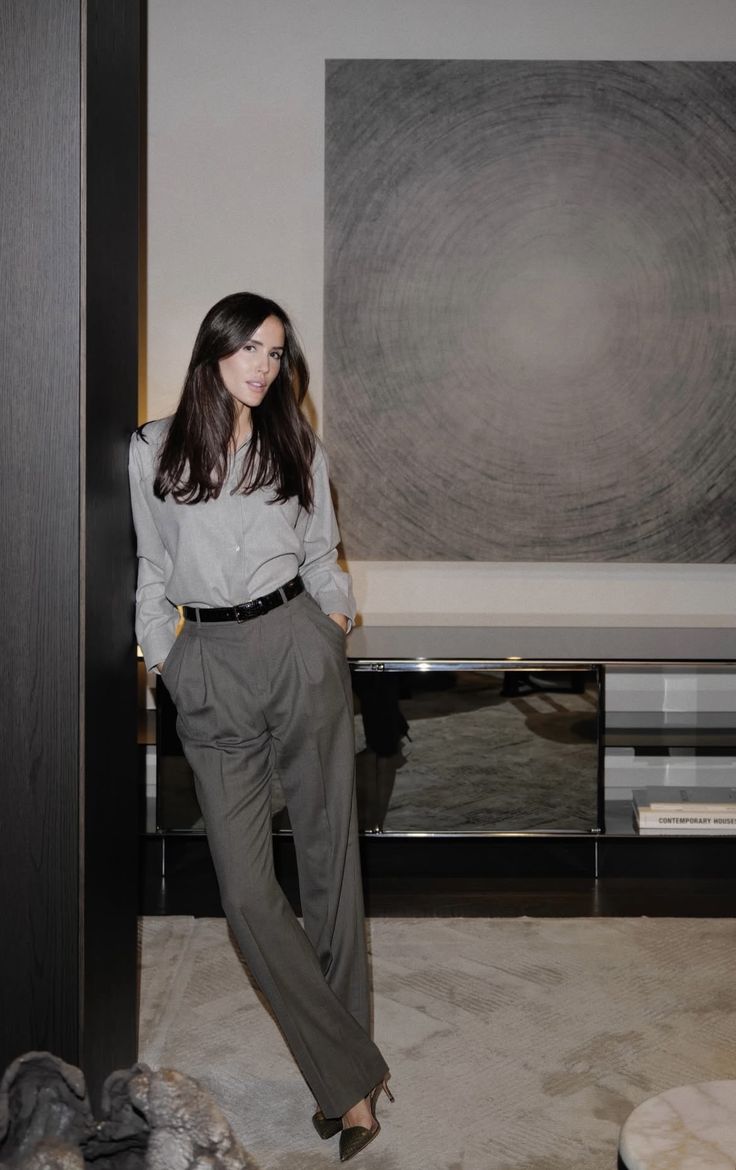
You’ve heard the advice “dress for the job you want, not the job you have.” It’s true — but for women it’s far more complicated than swapping jeans for a blazer.
Over fifteen years, I went from junior specialist to CEO — across law, finance, public administration, IT, and the creative industry. That path let me observe not one career but hundreds, and to spot patterns that hold true whether you’re in Europe, Asia, or the US. I spent years inside tight, mostly male teams within large mixed organizations, and I heard how decisions about promoting women are really made.
Here’s the uncomfortable part: even in the most modern, progressive teams, we’re still operating inside patriarchal attitudes. How a woman looks and presents herself shapes her career enormously — often more than her actual skills. This can and should change. But this isn’t a feminist manifesto. We’re here for something else: to understand how the system works, and how to use it to our own ends.
The fine line between feminine and professional
Start here, because this is the single most important thing every woman needs to understand — and it’s a subtle, deep point that decides far more than people realize.
You have to walk a fine line between two extremes. On one side, you stay feminine — without tipping over into a hard, irritating “masculinity.” On the other, you never create the impression that you’re over-using your femininity. That’s what makes it a paradox: both directions are penalized, so you can’t simply pick one and feel safe — you have to hold both at once.
It’s a very delicate balance, and getting it right is exactly what lets you succeed in the eyes of leadership.
It isn’t your manager who imposes this — it’s the business itself. The organization expects a combination of two worlds at once: full professionalism, and your gender identity as a woman, that is, your femininity. The complete professional takes on the hard work and falls short of no male colleague. But the same environment also expects the qualities it tends to read as “feminine” strengths — warmth, flexibility, empathy, the ability to connect with a wide range of people. It wants both, in one person.
I’m not telling you how to behave. I’m telling you what business expects of you, whether you want it or not — and that it expects you, as a professional, to play both roles. Two ways to fail follow:
- Tipping into excessive femininity reads as unprofessional, and as an attempt to “play” on it.
- Switching femininity off entirely hurts you on a human level: it pushes people away from you — not as a professional, but as a full, grounded, adult human being. And since soft skills drive every promotion, how you’re perceived as a person is never separate from how far you go.
So the task is to show both parts integrated. And notice what that really asks: in a patriarchal world, “professionalism” itself still defaults to male-coded behavior. You’re being asked to fuse a professional self the environment reads as masculine with your own identity as a woman — and to make the seam invisible. Yes, it’s an extra load no one hands your male colleagues. But ignoring it only makes your own path harder.
The mistake that quietly costs women promotions: looking infantile
None of us should be artificially downgrading our own chances. Yet that’s exactly what happens, far too often — and long before you say a word, your self-presentation has already argued for or against you. Behind closed doors this gets discussed far more than you’d ever imagine. The mistake cuts across every dress code, from business professional to business casual, and it has a name: infantilism.
The “cute girl” image has no place at work. It quietly strips you of weight in the eyes of the people who decide — and once you’re read as a child, no one hands you anything complex, responsible, or important. The good news is that this is the most fixable mistake of all. Here’s how to clear it, piece by piece.
What not to wear to work: audit the details
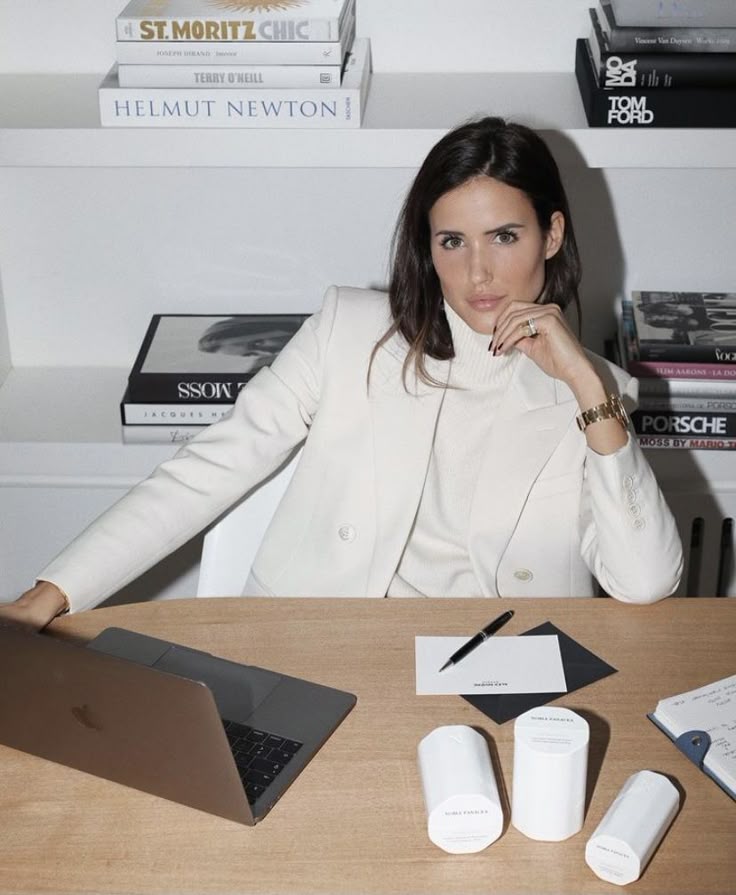
Let’s start with shapes. Ruffles, frills, bows — all of it reads as infantilism and a drift into excess romance. That’s not the energy to bring into the room if you want to be seen as a professional.
So review your entire wardrobe for “childish” details — and don’t fool yourself that a small one goes unnoticed. A ruffle on a back jeans pocket, decorative embroidery, a coy element on a cuff — each quietly lowers your perceived professionalism. The rule: scan the whole outfit. “The main piece is sharp, so I’m fine” doesn’t work. People read the entire picture, down to the smallest detail.
Accessories to avoid at work
Your next concrete action is to go through every accessory and find the infantile shapes — and not just jewelry. Pens, hair clips, planners, phone cases, bags. Check all of it.
Working in a male team, I heard more than once how people joked behind a woman’s back about “cute” little things like a pink feathered pen. That’s the reality of the workplace. A bright accessory that you find fun and sweet is read very differently: you get filed away as someone shallow who brings her childish side to work. And then a simple, if unfair, logic kicks in — children have no money, so there’s no reason to pay you much.
What to check. Earrings, clips, brooches, bags. Look for infantile prints and shapes — hearts, teddy bears, dolls, cartoon and anime characters, any reference to children’s worlds. At work, that’s the worst case.
Don’t skip the “classics.” Even familiar shapes can work against you. Bow earrings seem harmless but often read as not serious. Check not just the obviously childish items, but the ones you’ve come to consider neutral.
And appropriateness in general. No “funny” accessories with provocative shapes or slogans. The workplace isn’t the place for jokes worn on your body.
Prints, graphic tees, and color at the office
The same infantilism operates through pattern and color. I’ve heard men openly call women in pink “Barbie” — usually at the extremes, when someone wears almost nothing but pink. We’re not judging here — we’re noting the fact and putting it to use. Infantilism reads as childishness, and people don’t hand a child anything complex, responsible, or expensive.
Check your clothing for prints. Any image or text on any item: a graphic tee, sneakers, a bag, even a blazer. In most cases it’s worth dropping that item from your office rotation. You might object, “But I’ve seen Bill Gates in a printed T-shirt” — we’re not talking about people who can already get away with anything, but about women still building a career.
Now, honestly, without dogma. Can you build a career in prints and pink? Yes. Will it necessarily hold you back? Not necessarily — but more likely than not. That’s the whole point of strategy: choose what raises your odds, not what complicates the path.
The principle behind every rule
The higher your status, the more freedom you have. Freedom of self-expression in dress is something you arrive at once you’re satisfied with your position. While you still depend on others’ opinions — and those opinions shape your opportunities — it’s smart to play by sound rules. It isn’t forever. It’s a tool for the climb.